

Building compliance into every evacuation plan
by EvacTracker Founder, Dr. Rashid Khan
Compliance in evacuation planning has traditionally been approached as a periodic obligation, a plan documented, a drill conducted, and requirements formally met. While these measures satisfy baseline regulatory expectations, they do not necessarily ensure that an organisation is prepared to respond effectively in a real-world emergency.
Increasingly, global research and regulatory scrutiny are revealing a gap between documented compliance and operational readiness. Many organisations maintain outdated evacuation plans, apply them inconsistently, or test them insufficiently under realistic conditions. In these cases, compliance exists in principle, but not in practice.
This distinction is becoming more significant. Regulators are shifting their focus beyond documentation to the demonstrable effectiveness of emergency procedures. Organisations are now expected to show not only that plans exist, but that they are current, actionable, and supported by verifiable evidence of implementation.
Technology plays a critical role in enabling this transition. Rather than treating compliance as a standalone task, EvacTracker integrates it into the daily operation of a building or portfolio. Every evacuation, drill, and communication event is automatically recorded, creating a comprehensive and auditable data trail. Response times, participation rates, and communication flows are captured in real time, providing clear evidence of both preparedness and performance.
This approach strengthens not only accountability but consistency. One of the key risks in emergency response is variability, differences in how procedures are interpreted or executed across teams and locations. By standardising processes and guiding users through structured workflows, EvacTracker reduces reliance on individual judgment under pressure and ensures a more uniform response.
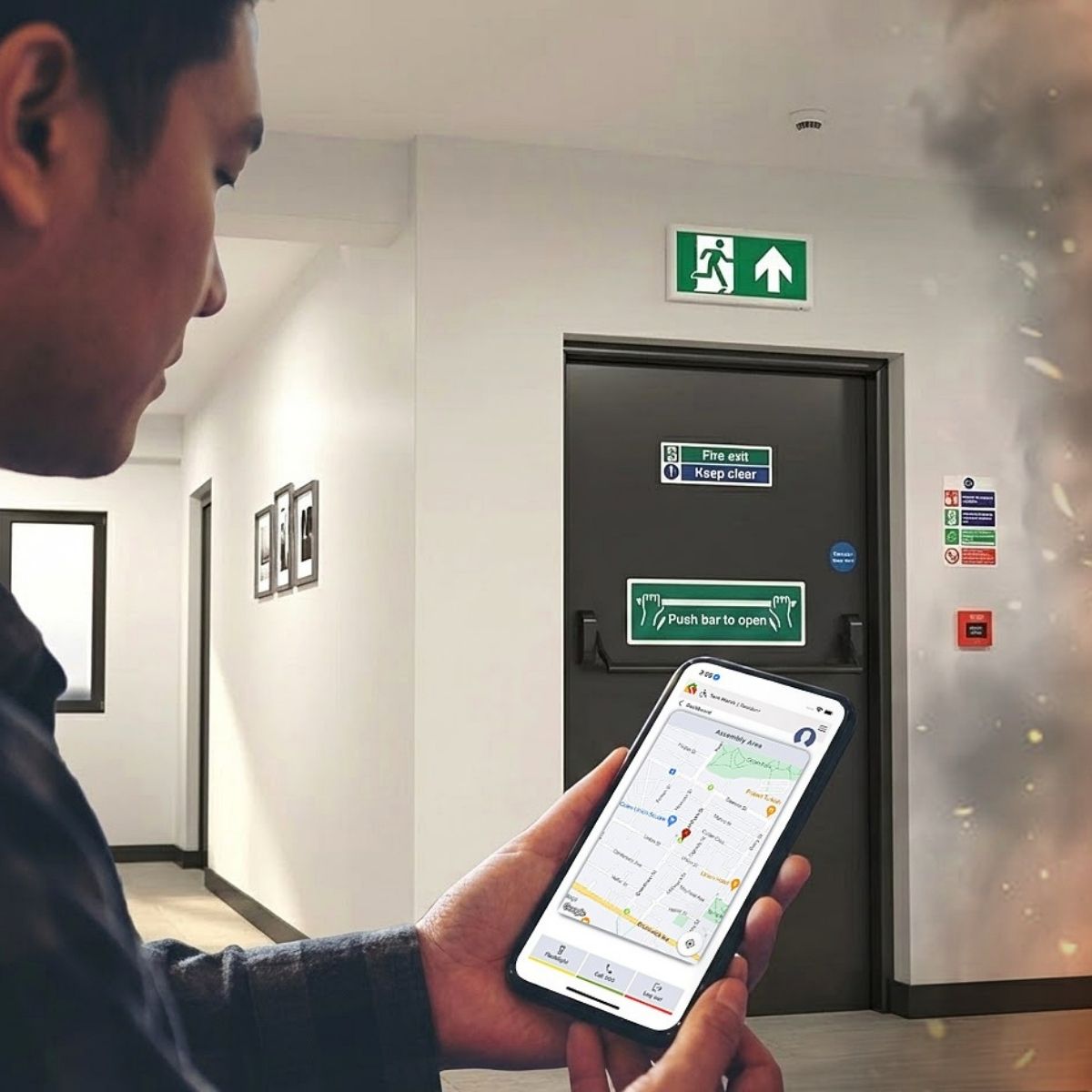
Equally important is the ability to maintain current and relevant evacuation plans. As building layouts evolve, occupancy changes, or new risks are identified, updates can be implemented instantly and distributed across all users. This removes the lag associated with traditional documentation and ensures that procedures remain aligned with the actual environment.
For organisations managing multiple sites, this creates a centralised view of compliance that is both transparent and scalable. Rather than fragmented records and inconsistent reporting, stakeholders have access to a unified system that reflects real-time readiness across the entire portfolio.
The cost of non-compliance continues to rise globally, encompassing financial penalties, legal exposure, and reputational impact. However, the more significant consequence lies in the potential failure to protect people effectively during an emergency.
Compliance should not be viewed as an endpoint, but as a foundation for operational excellence. By embedding compliance into everyday processes, EvacTracker enables organisations to move beyond meeting requirements and towards building systems that are demonstrably effective when it matters most.
Because ultimately, compliance is not defined by what is written down – but by what works in practice.