
How EvacTracker Is Redefining Building Safety
Introduction
In a world where emergencies can unfold in seconds, traditional evacuation plans are no longer enough. Safety today demands speed, precision, and certainty. EvacTracker is redefining how buildings respond to crises by delivering critical real-time alerts and personalised evacuation guidance so that occupants can react with confidence and safeguard their most valuable assets.
Problem Insight — Traditional Evacuation Plans Are No Longer Sufficient
Across workplaces and residential buildings, evacuation procedures continue to rely on static maps, annual drills, and manual coordination. These outdated systems struggle during real emergencies where panic, confusion, and unpredictable human movement take over.
In Australia, the gaps are clear. Fire and Safety Australia reports that over 50 percent of employees do not know where to go during an emergency, and fewer than one in four can locate their nearest fire extinguisher. Safe Work Australia recorded 188 workplace fatalities in 2024, with construction and manufacturing among the highest-risk sectors. These figures show that awareness, visibility, and real-time direction remain critical weaknesses in building safety.
Solution Insight — Real-Time, Intelligent Evacuation
What makes the platform revolutionary is its app-based, AI-driven approach. It replaces static evacuation maps with intelligent, adaptive communication. Instead of relying on assumptions, the system sends tailored alerts directly to occupants’ phones, guiding them through the safest exit routes in real time.
For facility managers, the dashboard delivers live visibility across multiple sites, showing how an evacuation is unfolding moment by moment. “Being data-rich in emergency management can make a difference in saving lives,” says Dr. Rashid Khan.
How It Works
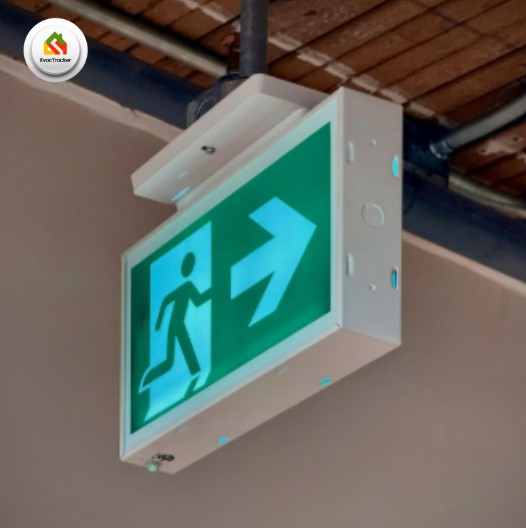
During an emergency, occupants receive location-aware alerts with real-time instructions on where to move. Exit routes dynamically adjust based on conditions inside the building. Facility managers and emergency controllers can monitor movement, identify bottlenecks, and see who has reached safety.
By embedding artificial intelligence at its core, the system interprets live data, models occupant behaviour, and continuously optimises evacuation pathways as conditions change.
Why It Works
The system transforms evacuation from a reactive procedure into a living safety network. Real-time visibility reduces panic, improves accountability, and supports faster decision-making. Predictive intelligence removes guesswork and replaces it with verified movement data, ensuring that both occupants and leadership act with confidence rather than assumption.
“Our mission is to protect people and property during emergencies,” Dr. Khan affirms.
Conclusion
From corporate towers to residential complexes, the platform is redefining building safety by transforming compliance checklists into intelligent, adaptive protection systems. When seconds matter most, safety must think, move, and respond in real time.